Predictions and Limiting Effects of Prequestions
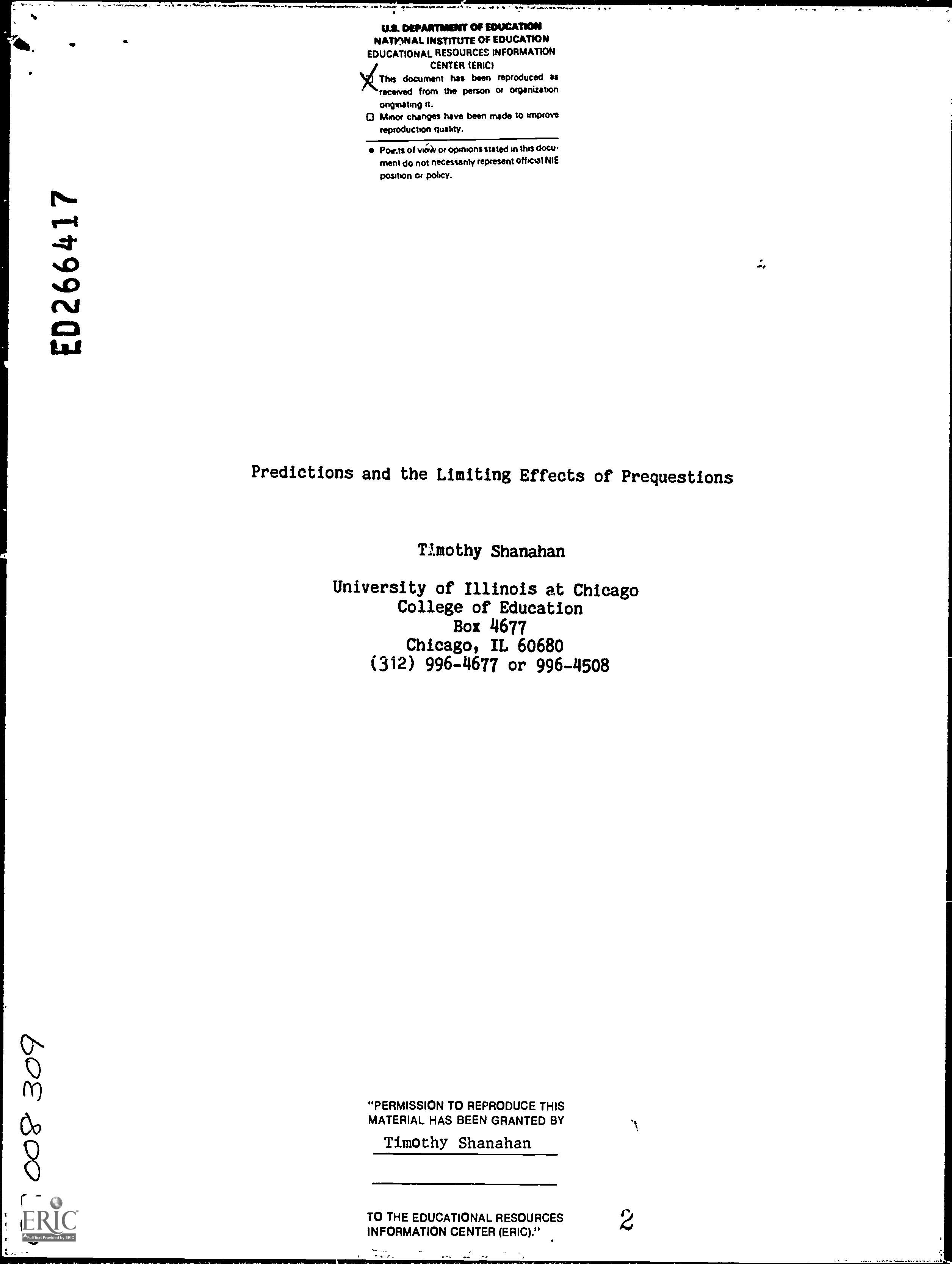
Predictions and Limiting Effects of Prequestions
Timothy Shanahan
A study examined the effects of teacher questioning and student prediction (purpose-setting procedures) upon the reading comprehension of 188 students in grades 3 through 6. Thirty-two constructed-answer questions were developed for use with an article about kangaroos, written in an expository style and approximately 900 words in length. Half of the questions were textually explicit and half textually implicit. Subjects were divided into four groups that were (1) provided with no specific reading purposes in the form of questions or predictions (control); (2) asked to read a massed list of prequestions silently while the investigator read them aloud (prequestions only); (3) asked to read the prequestion list, but also directed to write answers to each question, individually (individual predictions); and (4) asked to answer orally each of the prequestions (group prediction). Results showed no difference between groups on total recall, but the prequestion groups did better on the cued information than did the control group. The control group did better on the non-cued information, however. Prequestions with predictions seemed to increase recall on cued information, without any additional narrowing of attention beyond that caused by the use of prequestions alone. (HOD)
Featured Publications
10 Things Teachers Should Know about Rea...
Timothy Shanahan
Adolescent Literacy Instruction
Timothy Shanahan